“Andança” (Beth Carvalho, 1968)
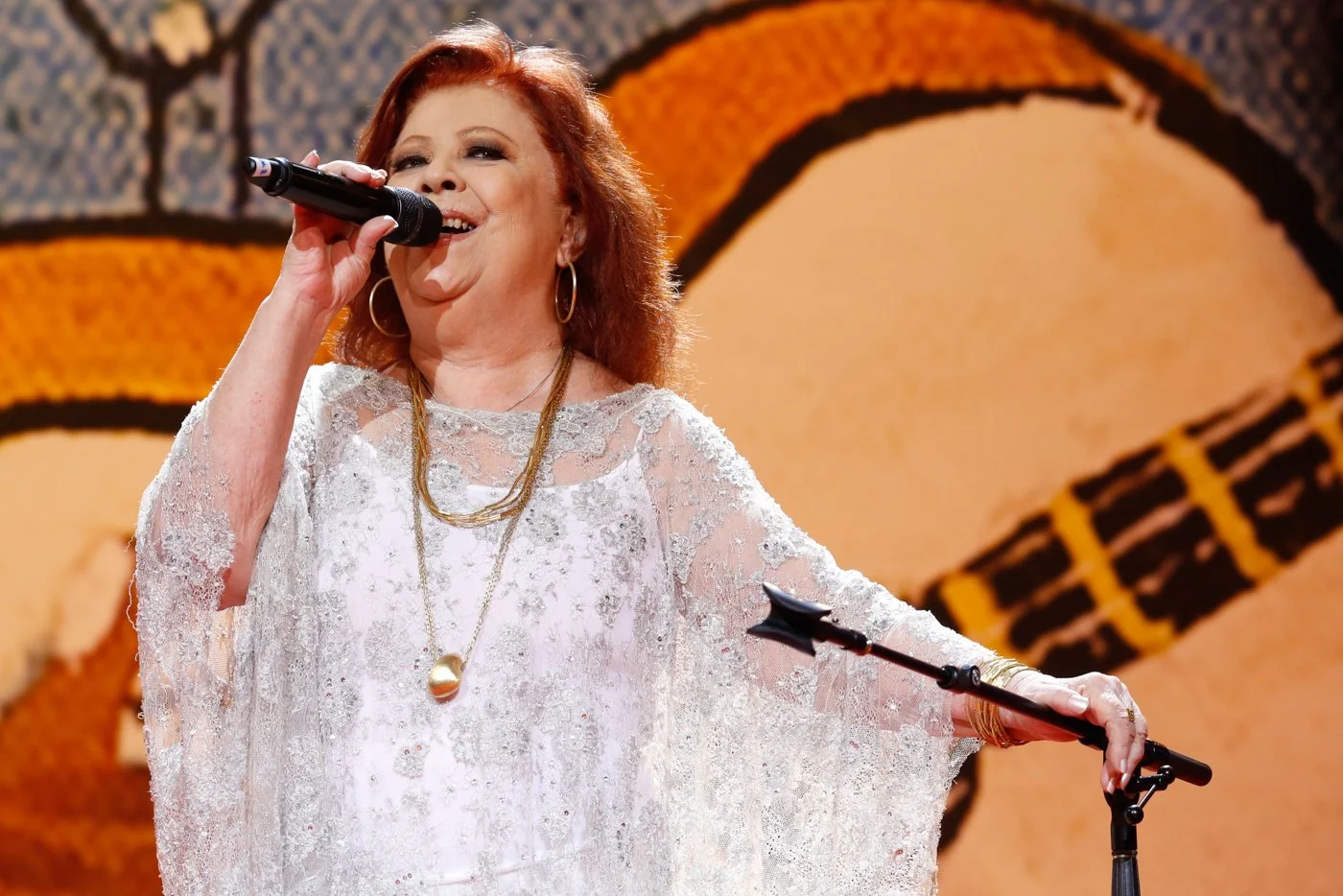
Source: 25º Prêmio da Música Brasileira, CC BY 2.0 <https://creativecommons.org/licenses/by/2.0>, via Wikimedia Commons
An amazingly large number of MPB artists are turning (or would have turned) 80 this year, enough that I’ve started a miniseries of translations to celebrate them. The first MPB great in this group is Beth Carvalho. Had she not died in 2019, she would have turned 80 last week on May 5. And what better way to start this tribute than with her song “Andança” about which the website letras.mus.br has this to say (my translation):
The lyrics to “Andança” … show how the search for love transforms life’s journey into something lighter and more meaningful. The line “I’ve tired of being alone” makes the desire to share the journey clear, while the refrain “wherever I go, I want to be your partner” reinforces the importance of having someone by your side, not just as company, but as a fundamental part of the path itself. … The figure of the romantic wanderer, “dressed in satin” and with “roses” in hand, mixes dream, poetry, and persistence in the face of the uncertainties of life. Images like “the gentle moon overflowing” and “my festive gaze became joyful” bring moments of beauty and celebration, even amid the longing and the constant searching. The lyrics also talk about maturing, as in “I’ve waged war on myself for not knowing / that this land shelters my beloved,” showing that love is the true guide and destination in this journey. “Andança” stands out as a song about hope and search for meaning, where love is both the point of departure and that of arrival. The lightness of the melody and Beth Carvalho’s striking interpretation transform the song into a classic that values encounters and memories throughout life.
A life of any length. Written by Danilo Caymmi, Edmundo Souto, and Paulinho Tapajós, Beth Carvalho’s rendition is by far the most well-known.
The language in the original of this song is arranged very poetically, which I’ve tried to keep in my translation. The other translation-related facet is the use of the simple past tense (e.g., “vim” and “andei”) that in English would often be translated as “I arrived” or “I walked” but can be translated as “I’ve arrived” or “I’ve walked” depending on the context. There’s also a hidden past perfect tense in the line about waging war: Portuguese uses “já” (“already”) to create a past perfect that in English uses the verb “to have” so “já fiz a guerra” = “I’ve waged war.” (AI and some translators will also translate the “já” in these constructions—“I’ve already waged war”—but I think that should only be limited to certain cases where the “already” matters.) Personally, I think that the songwriters here used the simple past to help the rhyme and sound, and that as far as the content is concerned, the English “I’ve” makes more sense in both cases (Portuguese’s simple past tense and Portuguese’s use of “já” to connote tense) and adds a beautiful layer of meaning to these lyrics once they’re in English to communicate something that has been going on for a while—for a whole life in fact.
“Andança”
Vim, tanta areia andei
Da lua cheia, eu sei
Uma saudade imensa
Vagando em verso, eu vim
Vestido de cetim
Na mão direita, rosas
Vou levar
Olha a lua mansa a se derramar (me leva, amor)
Ao luar descansa, meu caminhar (amor)
Meu olhar em festa se fez feliz (me leva, amor)
Lembrando a seresta que um dia eu fiz
(Por onde for, quero ser seu par)
Já me fiz a guerra por não saber (me leva, amor)
Que esta terra encerra meu bem-querer (amor)
E jamais termina meu caminhar (me leva, amor)
Só o amor me ensina onde vou chegar
(Por onde for, quero ser seu par)
Rodei de roda, andei
Dança da moda, eu sei
Cansei de ser sozinha
Verso encantado, usei
Meu namorado é rei
Nas lendas do caminho
Onde andei
No passo da estrada, só faço andar (me leva, amor)
Tenho meu amor pra me acompanhar (amor)
Vim de longe léguas, cantando, eu vim (me leva, amor)
Vou, não faço tréguas, sou mesmo assim
(Por onde for, quero ser seu par)
Já me fiz a guerra por não saber (me leva, amor)
Que esta terra encerra meu bem-querer (amor)
E jamais termina meu caminhar (me leva, amor)
Só o amor me ensina onde vou chegar
(Por onde for, quero ser seu par)
“Wandering”
I’ve arrived, so much sand I’ve walked
From the full moon, I know
An immense longing
Wandering in verse, I’ve come
Dressed in satin
In my right hand, roses
I will carry
Look at the gentle moon overflowing (take me, love)
Resting under the moonlight, my walk (love)
My festive gaze became joyful (take me, love)
Remembering the seresta that I sang one day
(Wherever I go, I want to be your partner)
I’ve waged war on myself for not knowing (take me, love)
That this land shelters my beloved (love)
And my journey never finishes (take me, love)
Only love teaches me where I’ll go
(Wherever I go, I want to be your partner)
I’ve turned in circles, I’ve walked
Popular dances, I know
I’ve tired of being along
Enchanted verses, I’ve used
My beloved is a king
In the legends of the path
Where I’ve walked
On the road’s path, I just keep walking (take me, love)
I have my love to accompany me (love)
I’ve traveled far leagues, singing, I’ve come (take me, love)
I’ll go, I don’t do truces, that’s just how I am
(Wherever I go, I want to be your partner)
I’ve waged war on myself for not knowing (take me, love)
That this land shelters my beloved (love)
And my journey never finishes (take me, love)
Only love teaches me where I’ll go
(Wherever I go, I want to be your partner)